Mrs G.G. Gerbing Azalea vs Encore Azalea: Bloom Season and Care
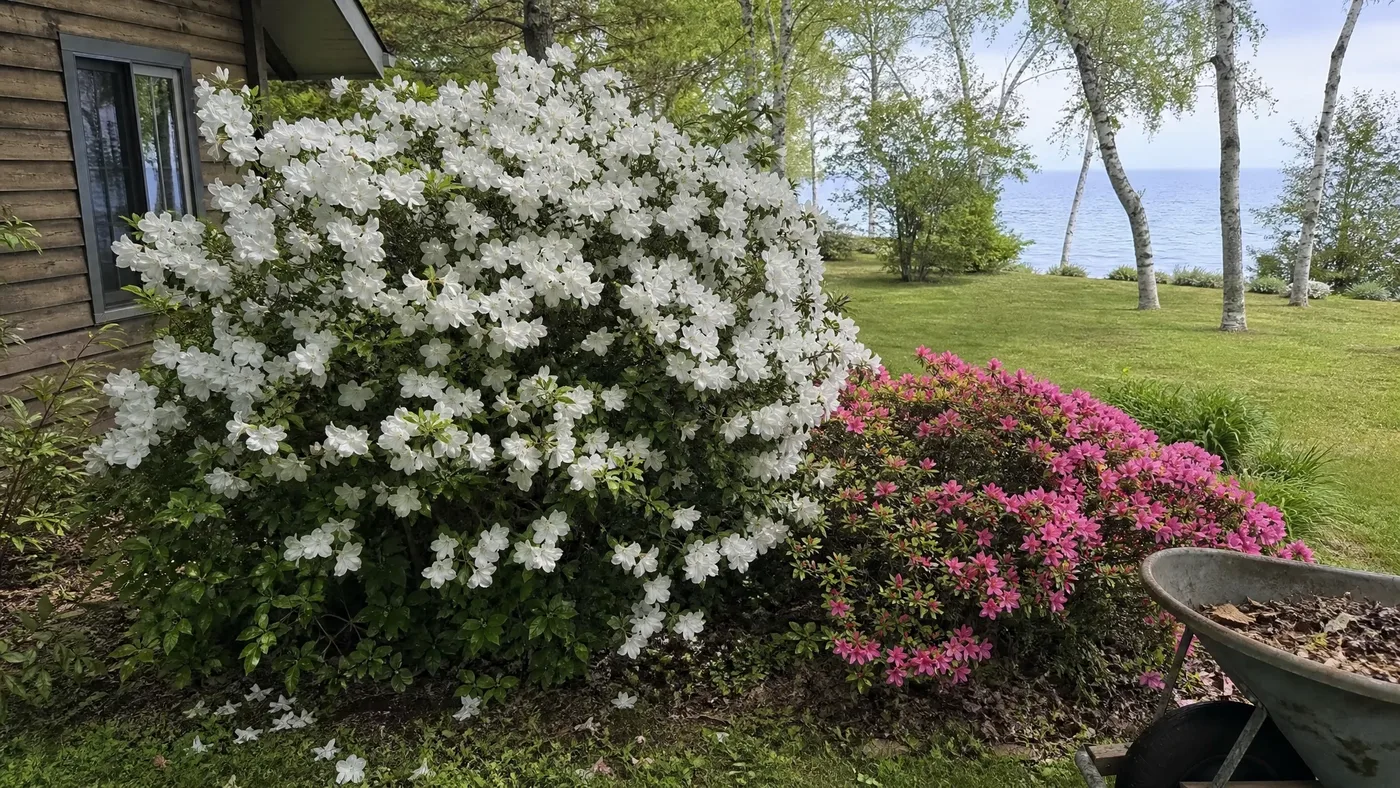
In our rows this season the Gerbings put on a solid white sheet for a few weeks and then went quietly green. That quiet stretch is what makes people ask whether a reblooming azalea is simply an upgrade.
We doubt it. A repeat bloomer trades one dramatic peak for several smaller ones, and whether that is a gain depends on your yard. Get the match wrong and you lose either the spring show you wanted or the space you thought you had. A plant in the wrong spot also costs you years, because azaleas are slow to forgive a bad start.
Read on for how the two compare on bloom, pruning, feeding, sun and freeze risk, and for which one we would plant in which yard.
One Big Flush Against Three Seasons of Flowers
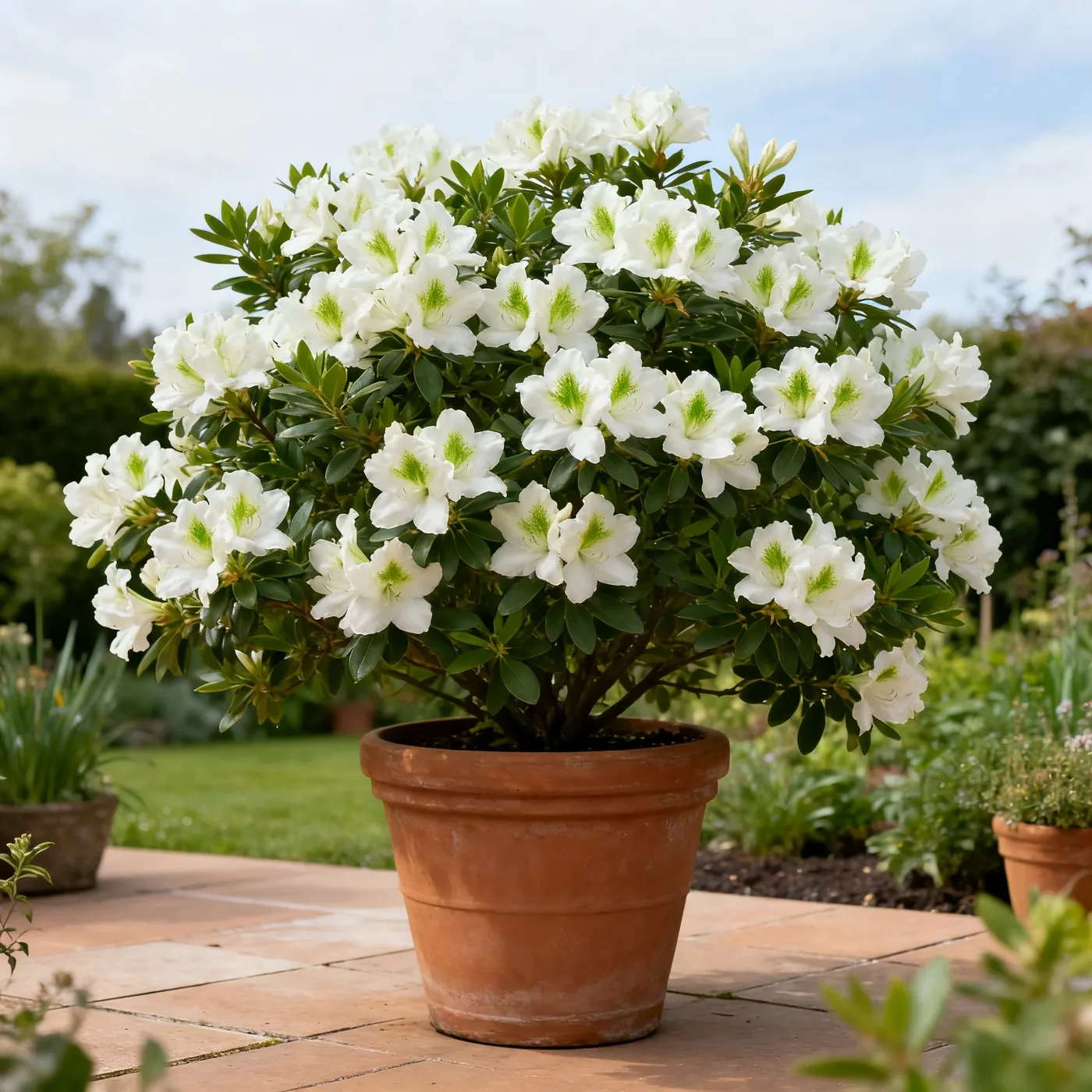
Mrs G.G. Gerbing blooms once, and it blooms hard. The white flowers open in mid-to-late spring, the show lasts roughly 2–3 weeks, and the plant sets next year's buds right after. Our bloom time and flower color guide covers the timing in more detail.
Encore is a series of azaleas, not a single plant, and the point of the series is a second show. The Encore series blooms twice a year, in spring and again in fall. In Arkansas the University of Arkansas extension puts the spring display in March and April and the fall bloom in September or early October.
You will see "three seasons of color" in sales copy. The extension sources we trust describe two main flushes. Any summer flowers are scattered extras, so do not plan a border around them.
Size Matters as Much as Bloom
Size separates the two as much as bloom does, and size drives the pruning and siting decisions below. The table sets out the differences that shape everything that follows.
| Trait | Mrs G.G. Gerbing | Encore series |
|---|---|---|
| Bloom pattern | One heavy spring flush | Spring, then again in fall |
| Mature height | Southern Indica hybrids reach 6–12 feet | Most grow 3–5 feet high and wide, per UGA |
| Pruning window | Right after spring bloom | Right after the spring flush |
| Feeding | One light feeding | Light, spread over spring and early summer |
Gerbing is a rapid grower, and the extension literature describes the Southern Indian group as making very large plants in a few years. If you plant one in a three-foot gap beside a window, you are buying a pruning chore.
Does Repeat Bloom Really Mean More Color?
Repeat bloom means more flowering weeks. It does not mean more flowers. Nothing in the extension material we rely on says the second flush matches the first. They say the bloom returns, and those are different claims.
Counting Color by the Week
Gerbing packs its season into a few weeks, so the plant is covered and the flowers hide most of the leaves. A reblooming azalea spreads the effort over two flushes, and a fall flush usually reads as a bonus on top of a solid spring show, not a second main event.
One of the most common questions we get is whether the fall flush will look like spring. Our honest answer is no, and we tell people to buy it for the extra weeks of color, not the extra volume.
There is also a trade in how the color looks. A single heavy peak reads as a landmark in the yard, something neighbors notice. Spread-out color reads as a pleasant background. Neither is wrong, but they answer different wishes.
When a Repeat Bloomer Does Not Repeat
If your Encore skips the fall show, work through the causes in order. Was it pruned after midsummer? Does it get so much shade that it barely set buds? Did it go into summer dry or stressed? Did a freeze catch the buds?
Most failed rebloom traces back to one of these four, and none of them is the plant's fault. Start with the pruning date, because it is the easiest to confirm and the easiest to fix next year.
Pruning Mrs G.G. Gerbing Azalea in June, Encore Anytime
Gerbing has a hard deadline. Clemson's fact sheet says to prune just after spring flowering, and the Georgia extension warns that many azaleas begin to set flower buds in July, so pruning after early July may reduce next year's flowers. For a plant that gives you one show a year, cutting the buds off means no show at all.
Because Gerbing can reach 6–12 feet, pruning is also how you keep it in bounds. Small cuts every June beat a hard cut every five years. Our pruning guide goes through the cuts in detail.
The common advice is that reblooming azaleas can be pruned "anytime." We would not trust it. A midsummer cut still removes buds, and you may lose the fall flush along with it. The steps below work for both plants.
- Wait until the last spring flowers fade, then prune within a few weeks.
- Take back only the length you need, cutting just above a leaf cluster.
- Stop by early July, and leave the plant alone through the fall.
Encore stays smaller, so it needs less cutting. That is one reason people find it easier, and it is a fair one.
If You Missed the Window
Say it is September and your Gerbing is shaggy. Leave it. Remove dead wood and a stray branch that crosses a walkway, and wait for next June. You give up a little tidiness and keep the buds that are already set.
Feeding Mrs G.G. Gerbing Azalea Once, Encore Several Times
Gerbing is a rapid grower that makes a very large plant in a few years, and it does not need much from you. We feed it once, lightly, as the bloom finishes, using an acid-forming azalea fertilizer. More food gives you more green growth, and the growth competes with the buds you want to form.
Fertilize azaleas lightly in spring and early summer with an extended-release, acid-forming azalea fertilizer. That leaves room for a second light round on a reblooming plant. If an Encore tag suggests several rounds, keep each one small and stop by early summer. Our fertilizing guide covers amounts and products for Gerbing.
Never fertilize with a high-nitrogen product in late fall. It can delay dormancy and cause plant injury, which matters most on a repeat bloomer that is still flowering in October.
Check pH Before You Add Fertilizer
Before you add more fertilizer to fix yellow leaves, check the soil pH. Azaleas want acid soil, and NC State lists a pH below 6.0 for this group. Other extension services put the range at 4.5 to 6.0 or a little lower.
Yellow leaves with green veins usually point to high pH, and more feeding will not cure it. A soil test tells you where you stand, and your local extension service can say how to lower pH in your soil.
Poor drainage is the other quiet cause. Root rot from wet soil is the most serious azalea problem the Georgia extension names, and it also yellows leaves. Fertilizer will not fix roots that cannot breathe.
Where Encore Forgives Sun and Gerbing Does Not
Sun is where the two plants part ways most clearly. Mississippi State's extension says that some azaleas can grow in full sun, but most are best suited to partial shade. Gerbing belongs to the second group. Morning sun with afternoon protection is our rule for it, and our sun and light guide explains why.
Some Encore sales copy suggests the series takes more sun. Treat that as a claim to check against the tag for your specific plant, not a promise. Even a sun-tolerant azalea in a hot, reflected-heat spot will struggle, and the smaller Encore plants have less leaf canopy to shade their own roots.
Reading Scorch and Lace Bugs
A Gerbing in too much sun shows bleached, stippled leaves. That is often lace bug damage, the most common azalea pest according to the Georgia extension, and stressed plants in hot sites get hit hardest. Turn a leaf over and look for dark specks on the underside.
Scorch looks different, with brown edges and crisp patches on the sun side. If you see either, the cure is a better site or more afternoon shade, not another spray.
The Opposite Problem
Too much shade is just as real. A Gerbing under dense evergreens grows leggy and flowers thinly. Dappled light through high branches, the kind NC State describes for this group, is the target.
Mrs G.G. Gerbing Azalea Buds in a Hard Freeze
Gerbing's whole year rides on one set of buds. They form in midsummer, sit through winter, and open in spring. A hard freeze after they swell can take the entire show, and there is no fall flush to make up for it.
The group is listed hardy in zones 6a to 9b, but that range is generous for this cultivar. Gerbing's hardiness is closer to 10°F, which is roughly zone 8, so we treat zone 7b as a stretch. Our winter care guide covers what to do in colder sites.
Encore has the same exposure in spring, but it can recover some of the lost color in fall. Its fall flush has its own risk, since an early frost can end those flowers within days. For hardiness zones on a particular Encore cultivar, check the plant tag or your local extension service.
Telling Frost From Petal Blight
If flowers turn brown and limp overnight after a cold snap, suspect frost. If petals show a veined pattern and stay firm, Texas A&M's plant disease handbook points to petal blight instead, which is a fungal problem and calls for a different response.
Frost damage is a one-time event. Blight tends to return in wet springs, so if you see it, clean up fallen petals and expect to watch for it again next year.
Choosing Between Mrs G.G. Gerbing Azalea and Encore
Neither plant wins on every count. The question is which one fits what you want from the yard. Here is how we would sort it:
- Choose Gerbing if you have room for a large shrub, a spot with morning sun and afternoon shade, and you want one heavy white spring display that people drive past to see.
- Choose Encore if you want a smaller plant, a longer season of at least some color, or a spot near the house where a quiet summer would bother you.
- Choose Gerbing for screens, backdrops and borders where size is an asset. Choose Encore for foundations, containers and tight beds where it is a liability.
- Choose neither if the spot is in all-day sun, has poor drainage, or the soil is above pH 6.0, until you fix the site.
Who Should Skip Gerbing
If you want something in bloom from spring through fall and you have a small bed, Gerbing will frustrate you. It is a spring plant, and it is honest about that. Do not buy it hoping it will behave like a repeat bloomer.
Who Should Skip Encore
If you want a tall evergreen backdrop with one spectacular white spring week, a smaller reblooming plant will not deliver the same effect. A long screen or a big backdrop is where Gerbing earns its space.
Customers usually ask us which one we grow, and the answer is Gerbing. We grow it ourselves, so we can tell you what to expect from a plant before it ships.
Neither Plant Wins, Only Yards Do
A repeat bloomer is not an upgrade on a classic. It is a different trade: more weeks of color, a smaller plant and a more forgiving feeding calendar, in exchange for a flush that never reaches Gerbing's full white sheet. Gerbing asks for a larger site, an early-summer pruning deadline and a protected spot, and it pays back in a single big show.
So our verdict is skeptical but fair. Neither plant is better, only better matched to a particular yard.
Mrs G.G. Gerbing Azalea
Nursery-grown Mrs G.G. Gerbing Azalea in sizes from 1 Gallon, shipped to your door.
From $26.99
Shop Now →Here on our farms, Mrs G.G. Gerbing sits in acidic, well-drained beds where afternoon shade keeps the leaves cool, and we get to enjoy its big white spring show each year. Growing and selling top-quality shrubs is our whole business, and we are a small outfit with farms of our own. If you have decided which azalea suits your yard, come and see what we have.