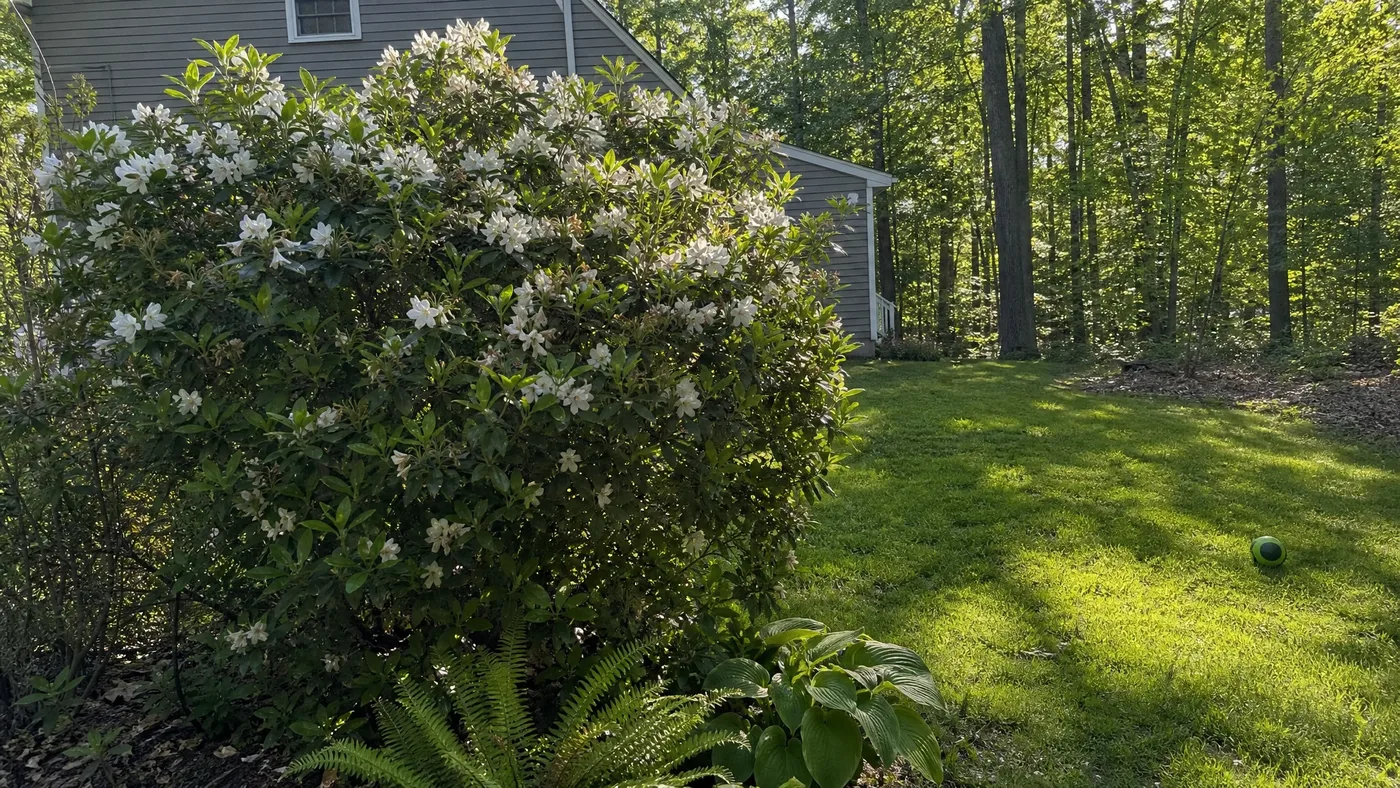
Mrs G.G. Gerbing Azalea Leafminers: Identification and Treatment
"Three years of sprays, and the blotches came back every May." A customer showed us that line in a garden notebook, with the money tallied beside it. Most of what that notebook paid for did nothing the shrub needed.
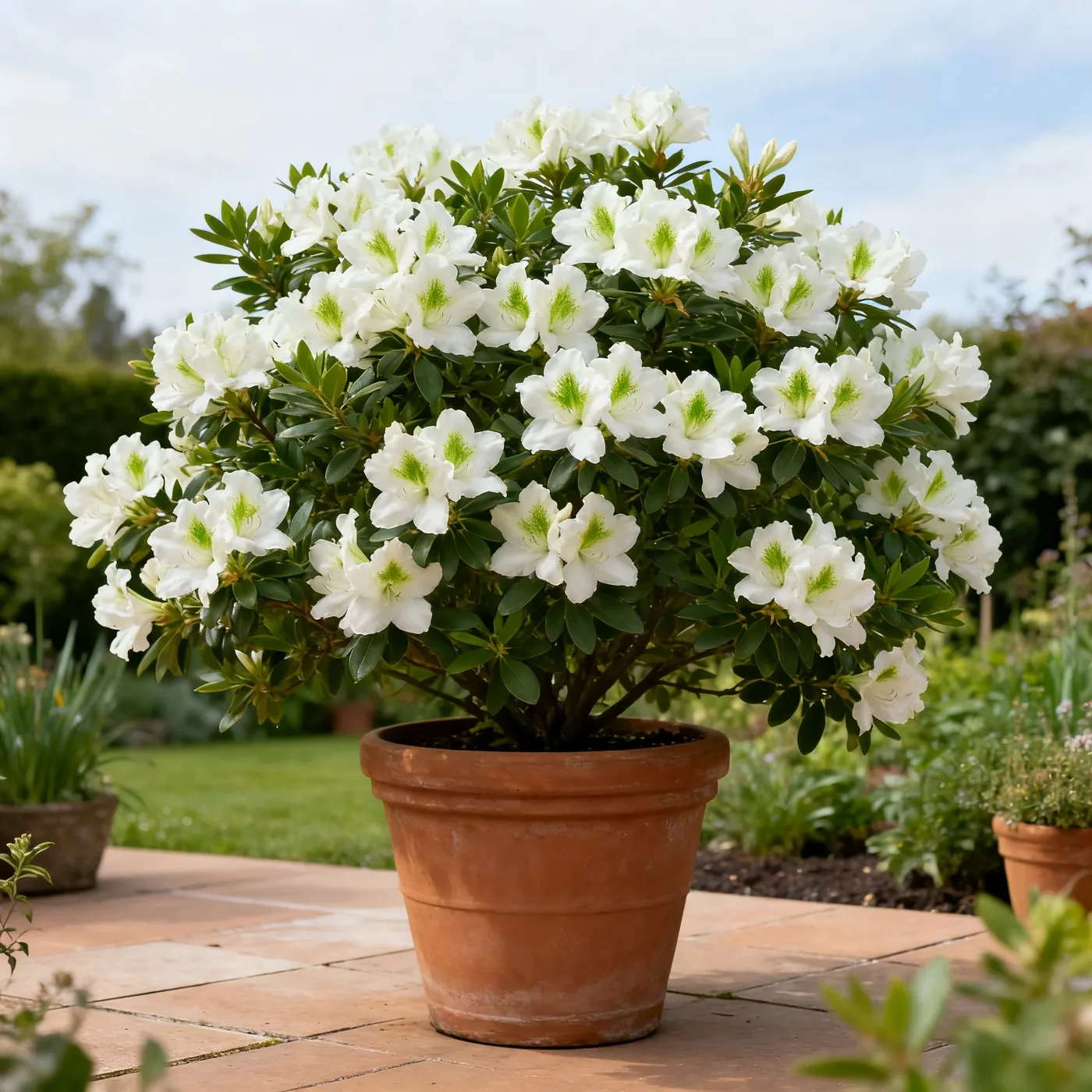
Mrs G.G. Gerbing sends up one heavy flush of large, glossy leaves, 2–3 inches long, right after its mid-season white bloom. Leafminer larvae work that tender flush, so the window for useful action is narrow and money is easy to misplace. Done badly, you spray after the damage is already sealed inside the leaf.
Below, you'll find out all about telling leafminer damage from look-alikes, including whether to pull leaves, when a spray or drench pays off, and how to scout so you only spend where it counts.
Do Blotches Mean a Dying Mrs G.G. Gerbing Azalea?
No, and the reason is in how the damage forms. The young larva enters the leaf directly beneath its eggshell and creates a blister on the underside of the leaf that turns brown. On a Gerbing the blade is broad and glossy, so even one mine shows from several feet away.
Only the early instars are leafminers. Entomologists at Rutgers note that early instars are leafminers, while later instars are leafrollers or leaftiers. That is why you may see blotches in spring and curled leaf tips later. Both come from the same pest, so do not read them as two separate problems.
Because Gerbing is evergreen, a blotched leaf stays on the shrub and keeps catching your eye for months. That visibility makes a cosmetic problem feel like a decline. A truly failing shrub looks different: whole branches wilt, leaves drop, and growth stalls everywhere, not just on one flush.
Before you worry, turn a few leaves over and look for the blister on the underside. If you find it, you have a leaf pest. If you find wilting stems instead, read our guide to common Mrs G.G. Gerbing problems and fixes, because the cause is probably in the roots or the soil.
Every Winding Trail Is Not a Leafminer
Identification comes before any purchase, and it is where most wasted money starts. Several problems put brown or pale marks on an azalea leaf, and only one of them is a leafminer. The table sorts what we most often see on Gerbing foliage.
| What you see | Where to look | Likely cause |
|---|---|---|
| Brown blotch with a blister beneath | New leaves, April or May | Leafminer mine |
| Curled or rolled leaf tip | New growth, June | Later-stage leafminer larvae |
| Bleached, bronzed or stippled surface | Older leaves, undersides | Lace bug |
| Crisp brown patch on the exposed side, no blister | Leaves facing afternoon sun | Sun scorch |
| Ragged, missing leaf edges | Any leaf, often new growth | Caterpillars |
Lace bug is the one most often mistaken for leafminer. Lace bugs cause bronzed or bleached-out leaves by sucking out leaf cell contents, and the damage is a fine stipple, not a raised brown pocket. A drench aimed at the wrong pest is money gone.
Scorch and chewing are easier to rule out. Scorch follows your light, so check our notes on sun and light needs. Chewed edges point to caterpillars, which have their own treatment.
One of the most common questions we get is whether a brown leaf is scorch or miners, and the answer is on the underside. Hold the leaf up to the light as well. A mine lets light through the thin, hollowed layer, while scorch is dry and opaque all the way through.
Infested Leaves Must All Come Off
This advice sounds tidy and costs a lot of time. A mature Gerbing carries far more leaves than you can inspect one by one, and a mine on a leaf underside is easy to miss. Stripping every marked leaf also removes working green tissue the shrub is using that season.
The Florida extension advice is narrower: prune off and destroy infested branches. That fits a shrub with a few affected tips, not one with blotches throughout. Use hand removal as spot work early in the season, and only where it saves you a later spray.
- Clip affected shoot tips in May, while mines are fresh and few, and bag them for the trash rather than the compost pile.
- Leave last year's brown blotches alone. An old mine is a finished record, and the green part of that leaf still works.
- Pick up clipped material the same day, since it carries the larvae you were trying to remove.
- Do any shaping right after bloom, as our guide to pruning Mrs G.G. Gerbing explains, so you do not cut off next year's flower buds.
Judge the labor against the payoff. Ten minutes of clipping in May can slow a small outbreak on a young plant. Hours of stripping in July change nothing the larvae have not already done, and the damaged leaves will drop on their own schedule.
Will Spring Spraying Protect Mrs G.G. Gerbing Azalea Buds?
Not directly, because leafminers do not feed on buds. What a spray protects is the leaf flush, and that matters for buds indirectly. Oregon State Extension notes that azaleas set buds for the following year right after flowering, and the post-bloom growth on Gerbing is the growth that carries them.
Get the Timing Right
Timing is the whole game. Georgia extension says to look for blotch mines in April or May and to treat in May if numerous developing mines are seen. The same page explains that because larvae feed inside mines or curled leaves, systemic insecticides are preferred over sprays that only coat the surface.
Once many large or long mines are visible, the larvae may have finished developing and control is not useful. A late spray on a heavily mined Gerbing buys you nothing. Do your counting while the mines are still small, then decide.
Choose a Treatment That Respects the Buds
Our sources do not rank products by bud safety, so we will not guess. Pick one labeled for azaleas, read its notes on flowers and bees, and wait for the bloom to finish if the label says so.
Your state extension service can tell you which active ingredients are registered where you live. Call before you buy, because a product that suits a nursery row may not be labeled for a home shrub.
A Soil Drench Is Always Worth the Money
It is not, though it is the right tool in the right year. A systemic product moves through the plant and reaches larvae that a surface spray never touches. That makes it the logical choice when a shrub is heavily mined, but logic about the tool does not settle whether you should buy it.
A drench protects the growth that follows, not the blotches already on the leaf. Those stay brown until the leaf drops. So the question is not whether the product works, but whether the shrub in front of you has enough mining to justify the cost and the timing.
When a Drench Earns Its Cost
Buy it when you find numerous developing mines on the May flush, especially if the same shrub was heavily mined last year. The cost scales with plant size, so a hedge of Gerbings adds up faster than a single specimen. Follow the label exactly on rate and timing.
When Doing Nothing Wins
If you see only a handful of blotches, clip the tips and skip the product. If the mines are already long and large, skip it too, since control is no longer useful. Doing nothing in those years costs you some tidy foliage and saves the entire product budget.
Spot treatment sits between the two. Clipping a few mined tips costs only your time, and it gives you a count to compare against next year.
Leafminers Will Kill a Mature Mrs G.G. Gerbing Azalea
None of the sources we rely on describe leafminers killing an established azalea. They describe a pest that blemishes new foliage. We will say plainly that the evidence here is thin, but it all points the same way, and it matches what we see.
What Actually Takes Shrubs Down
The real threat to an established azalea is underground. Plants are much more susceptible when planted in poorly drained areas or planted too deeply. Penn State Extension adds that fungicide on a root-rot plant merely delays eventual death. Spend your worry on drainage first, and see our notes on soil pH and drainage.
How a Healthy Shrub Absorbs the Damage
A vigorous evergreen replaces its flush each year, and Southern Indica hybrids are rapid growers. A blotched flush gets outgrown by healthy new growth the next season. In our rows, shrubs with good drainage and acid soil shrug off a mined flush without any change to their spring bloom.
Stress is what changes the picture. A shrub that is also dry, waterlogged or sun-baked has less to spare, so fix those conditions before any pest treatment. Our guide to Mrs G.G. Gerbing care covers the basics that keep a plant in that healthy range.
What Years of Leafminers Cost Mrs G.G. Gerbing Azalea Owners
Add it up over several seasons and the picture is mostly about restraint. A shrub left alone costs you appearance. A shrub sprayed every year costs you money for a pest that rarely threatens it. The sensible middle is a small, repeatable routine that spends only when the count says so.
Keep a note each year with the date, the rough number of mines and what you did. After three seasons you will know whether your site really has a leafminer problem or just an occasional one. That record is what the customer in the notebook was missing.
- In late April and May, check the new flush for brown blotches and the undersides for blisters.
- Decide by count. A few mines mean clipping, and numerous developing mines in May mean a labeled systemic treatment.
- In June, look for curled leaf tips. Georgia extension says they indicate completion of the first generation, so treating after that is too late.
- After bloom, prune as needed and write down what you saw.
If you are adding plants, we grow Mrs G.G. Gerbing ourselves and are glad to talk through site and pest questions before you buy.
Scouting Your Mrs G.G. Gerbing Azalea Before You Spend
Most leafminer damage on Gerbing is cosmetic, and most of the money spent on it goes to the wrong pest or the wrong week. Identify first, clip early, and treat only when May shows numerous developing mines. Put your effort into drainage and acid soil, since those protect the shrub far more than any spray.
Set aside a modest sum each year, and spend none of it until you have walked the shrub in June. Count what you find, write it down, and decide about next May then.
Mrs G.G. Gerbing Azalea
Nursery-grown Mrs G.G. Gerbing Azalea in sizes from 1 Gallon, shipped to your door.
From $26.99
Shop Now →Out on our farms, Mrs G.G. Gerbing grows in acidic, well-drained beds under dappled shade, and we walk those rows after bloom, when the new flush shows us what a clean leaf looks like. We grow and sell top-quality shrubs as a small business with our own farms. If you would like a healthy Gerbing to set in your own garden, we invite you to take a look.